

Dr. Jessica Spector is an author, researcher, and academic whose work spans scholarship, teaching, and applied practice. She holds a master’s degree and PhD in philosophy, with training in history and religious studies, as well as certifications in language and writing instruction and professional diplomas in the spirits world. Her work explores the social forces that shape how we live, with particular attention to where culture, commerce, and morality meet — from the labor we value, to the stories we tell, to the drinks we share.
Work & Approach
Focusing on the way we construct meaning through consumption, labor, and social practice, Dr. Spector examines the cultural weight of various activities, particularly those involving drink and sex. For over 30 years, her scholarship has centered on how moral systems and practices impact individuality, particularly in the form of societal taboos and the way various communities’ stories are told or silenced. This work has taken her from archives and archaeological sites to warehouses, bars, and distilleries, learning from the material artifacts of culture and the people who hold irreplaceable generational knowledge.
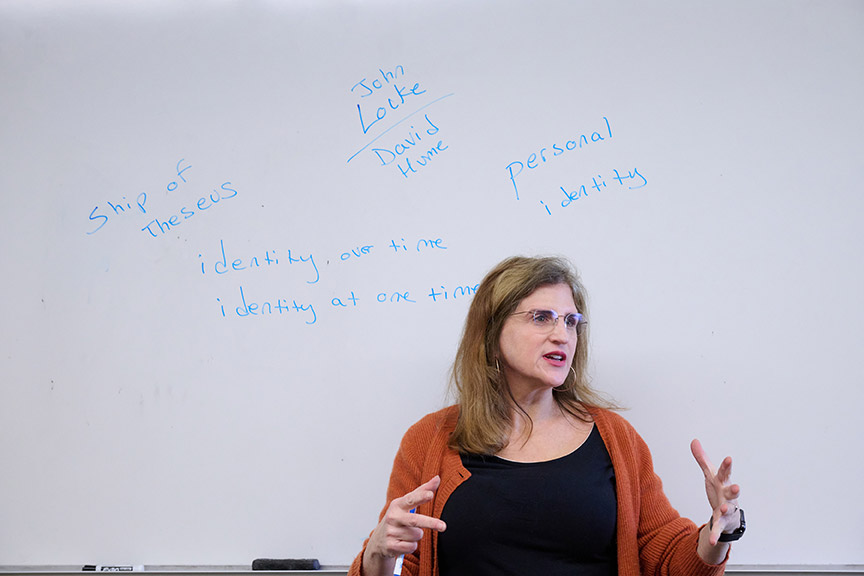
Dr. Spector’s research in moral psychology explores how seemingly descriptive accounts are often value-laden, revealing the social relations that structure our sense of self. This philosophical foundation informs her work across various domains: from questions of personal identity and moral agency, to ethical issues surrounding the sex industry, to the ways a sense of place shapes our relationships to food and drink.

From Research to Practice
Dr. Spector’s work is driven by curiosity about untold human stories and the forces that shape value, selfhood, and agency. Through the study of material culture and social practice, she traces philosophical questions that emerge in everyday life. She has served on the faculty at The University of Chicago, Roosevelt University, Trinity College, and Yale University, where she teaches seminars on drink culture and ethics. Her research, writing, and teaching have received multiple honors, and she regularly speaks on philosophy and history and advises community and industry organizations. She also brings this work into practice through private seminars, training, and consulting at The AcademyLLC™ and The Academy Drinks™.
Beyond the classroom and the conference room, Dr. Spector is the founder of Green Robin Farms, which applies principles of permaculture and regenerative agriculture through experimental agroforestry, reflecting her broader philosophical interest in how natural and cultural landscapes structure identity. The farm integrates maple, berries, mushrooms, and herbs within a diverse forest ecosystem, reintroducing native plants, supporting wildlife corridors, and reducing pressure on endangered species.
Dr. Spector’s publications include academic articles on ethics and identity, a book on cocktails, the collection Prostitution and Pornography: Philosophical Debate About the Sex Industry, and contribution to Bloomsbury Press’s forthcoming series The Cultural History of Prostitution. Her work has appeared in leading philosophy journals and scholarly anthologies from major academic presses, and she is a frequent interview subject and consultant on ethics and cultural history, with appearances in outlets as diverse as VinePair, Inside Hook, The Hartford Courant, Fox News and public radio.